
Gastroesophageal reflux is a physiologic process that refers to the effortless movement of stomach contents from the stomach to the esophagus. It occurs in everyone, multiple times every day, usually without producing symptoms or signs of damage. Reflux can also be pathologic and produce symptoms and signs of injury to the esophagus, oropharynx, larynx, and respiratory tract. Reflux damage to the esophagus (reflux esophagitis) is the most common form of Acid Reflux Disease and is most often recognized by recurrent heartburn. In almost all patients with heartburn, esophageal mucosal pathology is identifiable, although only about 40% have endoscopically detectable erosions. The remaining 60% of patients with heartburn have endoscopically undetectable (microscopic) pathology—termed nonerosive reflux disease (NERD).
Acid Reflux Disease is one of the most common diseases in the Western world based on the prevalence of heartburn. In the United States, about 45% of adults have heartburn at least once a month, about 20% once a week, and about 10% daily. Heartburn affects men two- to threefold more often than it affects women and is more common in whites than blacks. Although Acid Reflux Disease rarely causes death, it reduces quality of life and has a morbidity rate of 10 to 15% secondary to ulceration, bleeding, stricture, Barrett's esophagus, and adenocarcinoma. The overall risk for esophageal adenocarcinoma in patients with heartburn is very low, with estimates of 1 in 2500 cases per year for those with daily heartburn to 1 in 10,000 cases per year for those with monthly heartburn.
Acid Reflux Disease develops when acidic stomach contents reflux into the esophagus and remain there long enough to overcome the resistance of the esophageal epithelium. Based on 24-hour esophageal pH monitoring, Acid Reflux Disease develops in at least two fundamentally different ways: (1) under conditions in which there is prolonged contact of the esophageal epithelium with refluxed stomach acid and (2) under conditions in which the esophageal epithelium is damaged despite a normal duration of contact with refluxed stomach acid. Prolonged acid contact results from defects in the antireflux barriers or luminal clearance mechanisms (or both), with transient LES relaxations accounting for more than 50% of acid reflux events in NERD. These relaxations are non–swallow-induced, reflex relaxations of the LES caused by stomach fundic distention. They are associated with acid reflux because they are twice as long as relaxations with swallowing and, unlike swallow-induced LES relaxations, are accompanied by inhibition of diaphragmatic contraction and unaccompanied by lumen-obliterating esophageal peristalsis. The cause of the increase in the frequency of acid reflux episodes associated with transient relaxations in patients with Acid Reflux Disease is unclear but is unrelated to delayed stomach emptying or infection with Helicobacter pylori. A diet rich in nonabsorbable carbohydrates may be one possible provocateur. In erosive esophagitis, transient LES relaxations account for less than 50% of acid reflux events, with most occurring across a mechanically weak LES. Whether LES weakness causes erosive esophagitis or is a consequence of it remains unclear because products released during inflammation can impair LES contractility. Similarly, hiatal hernias and impaired peristalsis are common in erosive esophagitis, but whether they are cause or consequence is also unclear because esophagitis can result in both esophageal shortening (by sustained contraction of the longitudinal muscle) and peristaltic dysfunction (by weakening circular muscle contractility). Patients with heartburn despite normal acid contact time presumably have primary defects in tissue resistance, with these defects probably being acquired by dietary indiscretions such as excess exposure to alcoholic, hypertonic, or hot-temperature products.
Gastroesophageal reflux disease (GERD) is defined as symptoms or tissue damage resulting from reflux of gastric acid into the esophagus and more proximal structures.
The predominant symptoms of GERD are heartburn and regurgitation.
Atypical symptoms include cough, asthma, hoarseness, chest pain, hiccups, and dental erosions.
Symptom response to a therapeutic trial of PPIs can be diagnostic.
Endoscopic evaluation is recommended for patients with warning symptoms of dysphagia, odynophagia, early satiety, weight loss, or bleeding, and atypical symptoms (cough, asthma, hoarseness, chest pain, aphthous ulcers, hiccups, dental erosions).
Patients with symptoms refractory to empiric acid suppression or requiring continuous medication for prolonged periods should also undergo endoscopy.
Ambulatory pH monitoring is used to establish elevated esophageal acid exposure and symptom-reflux correlation in patients with ongoing symptoms despite acid suppression (especially if endoscopy is negative) or those with atypical symptoms. It is also used to determine adequacy of acid suppression in patients with established GERD and ongoing symptoms.
Lifestyle Modification
The basics of lifestyle modification include eating small meals; refraining from eating for 2-3 hours before lying down; elevating the head of the bed 4-6 in.; decreasing intake of fatty foods, chocolate, coffee, cola, and alcohol; and smoking cessation.
Lifestyle modification also includes avoiding medications such as calcium channel blockers, theophylline, sedatives/tranquilizers, and anticholinergics, as they may potentiate reflux.
Lifestyle modifications alone are unlikely to resolve symptoms in the majority of GERD patients, but should be recommended in conjunction with medications.
Medications
In patients with mild or intermittent symptoms, over-the-counter antacids and H2RAs can be used intermittently or prophylactically if necessary.
PPIs have been demonstrated to be more effective than placebo or standard-dose H2RA in symptomatic relief as well as endoscopic healing of GERD. Higher doses (omeprazole, 20–40 mg PO bid or equivalent) may be required in severe esophagitis or persistent symptoms. Continuous long-term PPI therapy is safe and effective in maintaining remission of GERD symptoms, and is recommended for patients with erosive esophagitis, Barrett's esophagus, and severe symptoms.
Standard doses of H2RAs can result in symptomatic benefit in up to 60% of patients and endoscopic healing in 50%. Higher doses of H2RAs (equivalent to ranitidine, 600 mg daily) improve the healing rate to 75% at a higher cost. Dosage adjustments are required in renal insufficiency.
Surgery
Indications for fundoplication include the need for continuous or increasing doses of medication in patients who are good surgical candidates. Patients who require aggressive long-term medical therapy should be offered the surgical option. Other indications include patient preference for surgery and noncompliance with medical therapy.
The success rate of laparoscopic fundoplication in controlling GERD symptoms exceeds 90%, with fewer complications compared to the open technique. Elevated esophageal acid exposure and correlation of symptoms to reflux events on ambulatory pH monitoring predict a higher likelihood of a successful outcome.
Patients with medical treatment failures need careful evaluation to determine whether symptoms are indeed related to acid reflux before surgical options are considered; these patients often have other diagnoses including visceral hypersensitivity and functional heartburn.
Complications
Esophageal ulceration and stricture formation can occur in patients with GERD. Iron-deficiency anemia is less common.
GERD can contribute to laryngitis, laryngeal ulcers, asthma, and dental caries.
Barrett's esophagus is a change in the esophageal mucosa from normal squamous epithelium to specialized intestinal metaplastic epithelium due to longstanding acid related injury. It carries a small risk of progression to esophageal adenocarcinoma. Endoscopic surveillance for Barrett's esophagus should be considered in patients with a symptom history that exceeds 5 years.
GASTROESOPHAGEAL REFLUX DISEASE
Pathophysiology: The normal antireflux mechanisms consist of the LES, the crural diaphragm, and the anatomic location of the gastroesophageal junction below the diaphragmatic hiatus. Reflux occurs only when the gradient of pressure between the LES and the stomach is lost. It can be caused by a sustained or transient decrease in LES tone. A sustained hypotension of the LES may be due to muscle weakness that is often without apparent cause. Secondary causes of LES incompetence include scleroderma-like diseases, myopathy associated with chronic intestinal pseudo-obstruction, pregnancy, smoking, anticholinergic drugs, smooth-muscle relaxants [b-adrenergic agents, aminophylline, nitrates, calcium channel blockers, phosphodiesterase inhibitors that increase cyclic AMP or cyclic GMP (including sildenofil)], surgical destruction of the LES, and esophagitis.tLESRwithout associated esophageal contraction is due to a vagal reflex in which LES relaxation is elicited by gastric distention. Increased tLESR is associated with GERD. A similar reflex operates during belching. Apart from incompetent barriers, gastric contents are most likely to reflux (1) when gastric volume is increased (after meals, in pyloric obstruction, in gastric stasis, during acid hypersecretion states), (2) when gastric contents are near the gastroesophageal junction (in recumbency, bending down, hiatus hernia), and (3) when gastric pressure is increased (obesity, pregnancy, ascites, tight clothes). Incompetence of the diaphragmatic crural muscle, which surrounds the esophageal hiatus in the diaphragm and functions as an external LES, also predisposes to GERD.
Reflux esophagitis is a complication of reflux and develops when mucosal defenses are unable to counteract the damage done by acid, pepsin, and bile. Mild esophagitis involves microscopic changes of mucosal infiltration with granulocytes or eosinophils, hyperplasia of basal cells, and elongation of dermal pegs. Endoscopic appearance may be normal. Erosive esophagitis involves endoscopically apparent mucosal damage, redness, friability, bleeding, superficial, linear ulcers, and exudates. Peptic stricture results from fibrosis that causes lumenal constriction. These strictures occur in ~10% of patients with untreated GERD. Short strictures caused by spontaneous reflux are usually 1 to 3 cm long and are present in the distal esophagus near the squamocolumnar junction. Long, tubular peptic strictures can result from persistent vomiting or prolonged nasogastric intubation. Erosive esophagitis may cause bleeding and heal by intestinal metaplasia (Barrett's esophagus) that is a risk factor for adenocarcinoma.
Clinical Features: Regurgitation of sour material in the mouth and heartburn are the characteristic symptoms of GERD. Heartburn is produced by the contact of refluxed material with the inflamed or sensitized esophageal mucosa. Angina-like or atypical chest pain occurs in some patients, while others experience no heartburn or chest pain. Persistent dysphagia suggests development of a peptic stricture. Most patients with peptic stricture have a history of several years of heartburn preceding dysphagia. However, in one-third of patients, dysphagia is the presenting symptom. Rapidly progressive dysphagia and weight loss may indicate the development of adenocarcinoma in Barrett's esophagus. Bleeding occurs due to mucosal erosions or Barrett's ulcer. Severe reflux may reach the pharynx and mouth and result in laryngitis, morning hoarseness, and pulmonary aspiration. Recurrent pulmonary aspiration can cause aspiration pneumonia, pulmonary fibrosis, or chronic asthma. By contrast, many patients with GERD remain asymptomatic or self-treated and do not seek attention until severe complications occur.
What is acid reflux disease? An acid reflux flash animation that simply answers frequently asked questions about GERD and Acid Reflux Surgery.
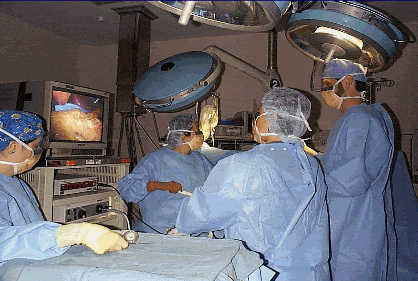
The term acid reflux disease or (GERD) describes any symptomatic condition or histopathologic alteration resulting from episodes of acid reflux. Reflux esophagitis is a condition experienced by a subset of GERD patients with endoscopically evident lesions in the esophageal mucosa. However, acid reflux often causes symptoms in the absence of esophagitis, and 24-hour esophageal pH monitoring can be helpful in identifying this subset of GERD patients. Nonerosive, or endoscopy-negative, GERD patients have reflux symptoms and abnormal esophageal acid exposure during ambulatory 24-hour pH monitoring, but no endoscopic evidence of esophagitis. The acid sensitive esophagus patient is in a subset of the endoscopy-negative GERD population characterized by normal esophageal acid exposure but nonetheless a strong correlation between reflux symptoms and acid reflux events.
Acid reflux disease (GERD) results from the failure of the normal antireflux mechanism to protect against frequent and abnormal amounts of acid reflux (GER), that is, the effortless movement of gastric contents from the stomach to the esophagus. GER is not itself a disease, but a normal physiological process. It occurs in virtually everyone, multiple times everyday, especially after large meals, without producing either symptoms or signs of mucosal damage. In contrast, GERD is a spectrum of disease usually producing symptoms of heartburn and acid regurgitation. Most patients have no visible mucosal injury at the time of endoscopic examination (nonerosive GERD), whereas others have esophagitis, peptic strictures, Barrett esophagus, or evidence of extraesophageal diseases such as chest pain, pulmonary symptoms, or ear, nose, and throat symptoms. GERD is a multifactorial process, one of the most common human diseases, and of economic importance, contributing to the expenditure in the United States of 4 to 5 billion dollars per year for antacid medications.
Acid reflux is the back flow of stomach contents into the esophagus. These contents irritate the esophagus and cause heartburn. The esophagus is a tube that transports food into the stomach, it has a sphincter at its lower end which prevents reflux. Relaxation of this sphincter is the main factor responsible for this disease. Many foods and drugs relax the lower esophageal sphincter.
Fatty meals and nitrates are common causes. Other factors include smoking, coffee, chocolate, orange juice, obesity and tight clothes.
Acid reflux is also called GERD (G: gastro, E: esophageal, R: reflux and D: disease).